LUMO
LUMO
LUMO
A next generation fintech app that reduces financial anxiety by pairing smart
analytics with emotion aware design.
A next generation fintech app that reduces financial anxiety by pairing
smart analytics with emotion aware design.
A next generation fintech app that reduces
financial anxiety by pairing smart analytics
with emotion aware design.
Project Overview
Project Overview
My Role: UX/UI Designer
My Role: UX/UI Designer
Platform: Mobile
Platform: Mobile
Timeline:3 Months
Timeline: 3 Months
PROBLEM
PROBLEM
Traditional fintech apps treat money management as a purely logical activity, ignoring the
emotional and psychological realities of how people actually spend. As a result, users
feel judged, overwhelmed, and disconnected leading them to avoid the app instead of improving
their financial habits.
Traditional fintech apps treat money management as a purely logical
activity, ignoring the emotional and psychological realities of how people
actually spend. As a result, users feel judged, overwhelmed, and
disconnected leading them to avoid the app instead of improving their
financial habits.
Traditional fintech apps treat money
management as a purely logical activity,
ignoring the emotional and psychological
realities of how people actually spend. As a
result, users feel judged, overwhelmed, and
disconnected leading them to avoid the
app instead of improving their financial
habits.
PROBLEM STATEMENT
PROBLEM STATEMENT
Users need a calm, emotional supportive way to manage their finances because existing fintech
apps prioritize efficiency and data over human psychology, causing anxiety, impulsive spending
and, long term disengagement.
Users need a calm, emotional supportive way to manage their finances
because existing fintech apps prioritize efficiency and data over human
psychology, causing anxiety, impulsive spending and, long term
disengagement.
Users need a calm, emotional supportive way
to manage their finances because existing
fintech apps prioritize efficiency and data
over human psychology, causing anxiety,
impulsive spending and, long term
disengagement.
KEY INSIGHTS
KEY INSIGHTS
Users feel anxious when payment information is dense or unclear.
Fast checkout increase impulsive decisions.
Financial products require higher trust and reassurance.
Users feel anxious when payment information
is dense or unclear.
Fast checkout increase impulsive decisions.
Financial products require higher trust and
reassurance.
DESIGN DECISION
DESIGN DECISION
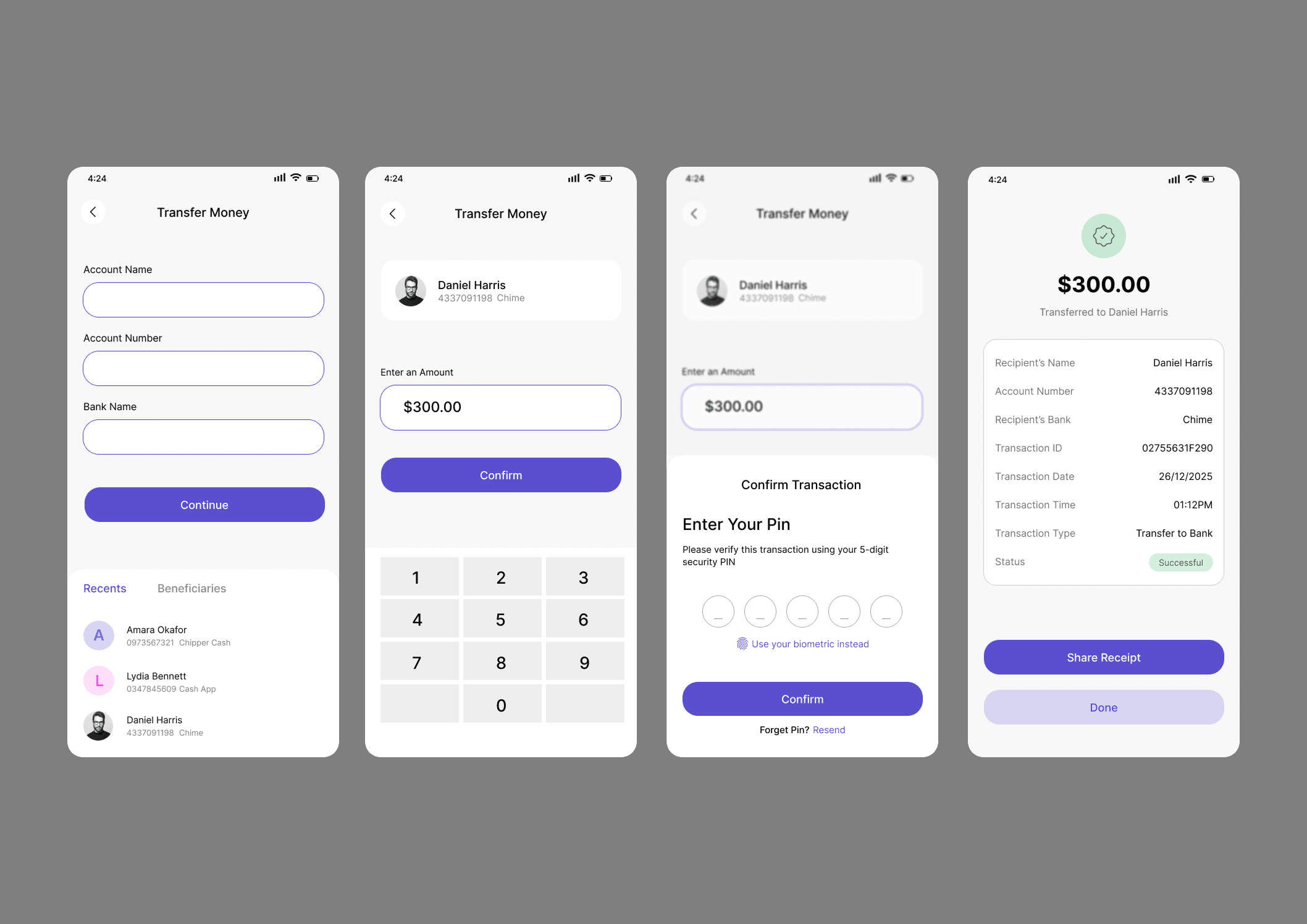
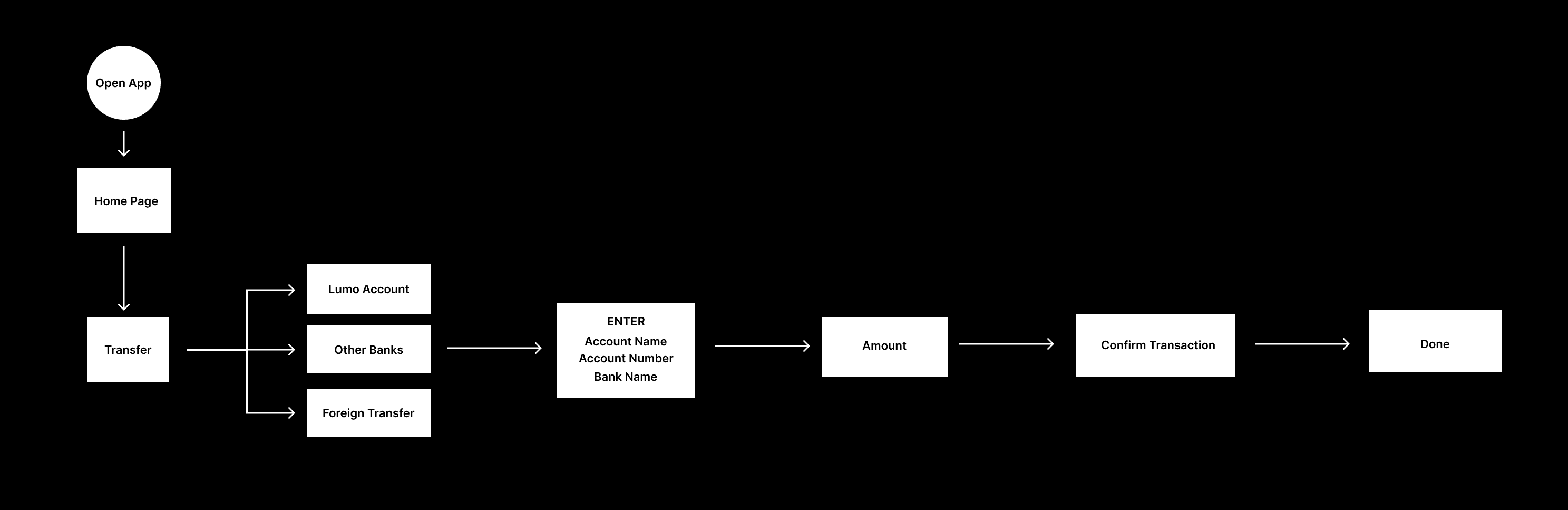
I reduce cognitive load through deliberate user of visual hierarchy, spacing, and scannability.
Considering user pain points around financial anxiety and impulsive behavior, I streamlined
the checkout flow while introducing intentional friction to slow down decision making and
increase user confidence during payment.
I reduce cognitive load through deliberate user of visual hierarchy,
spacing, and scannability. Considering user pain points around financial
anxiety and impulsive behavior, I streamlined the checkout flow while
introducing intentional friction to slow down decision making and
increase user confidence during payment.
I reduce cognitive load through deliberate
user of visual hierarchy, spacing, and
scannability. Considering user pain points
around financial anxiety and impulsive
behavior, I streamlined the checkout flow
while introducing intentional friction to slow
down decision making and increase user
confidence during payment.
SOLUTION
SOLUTION
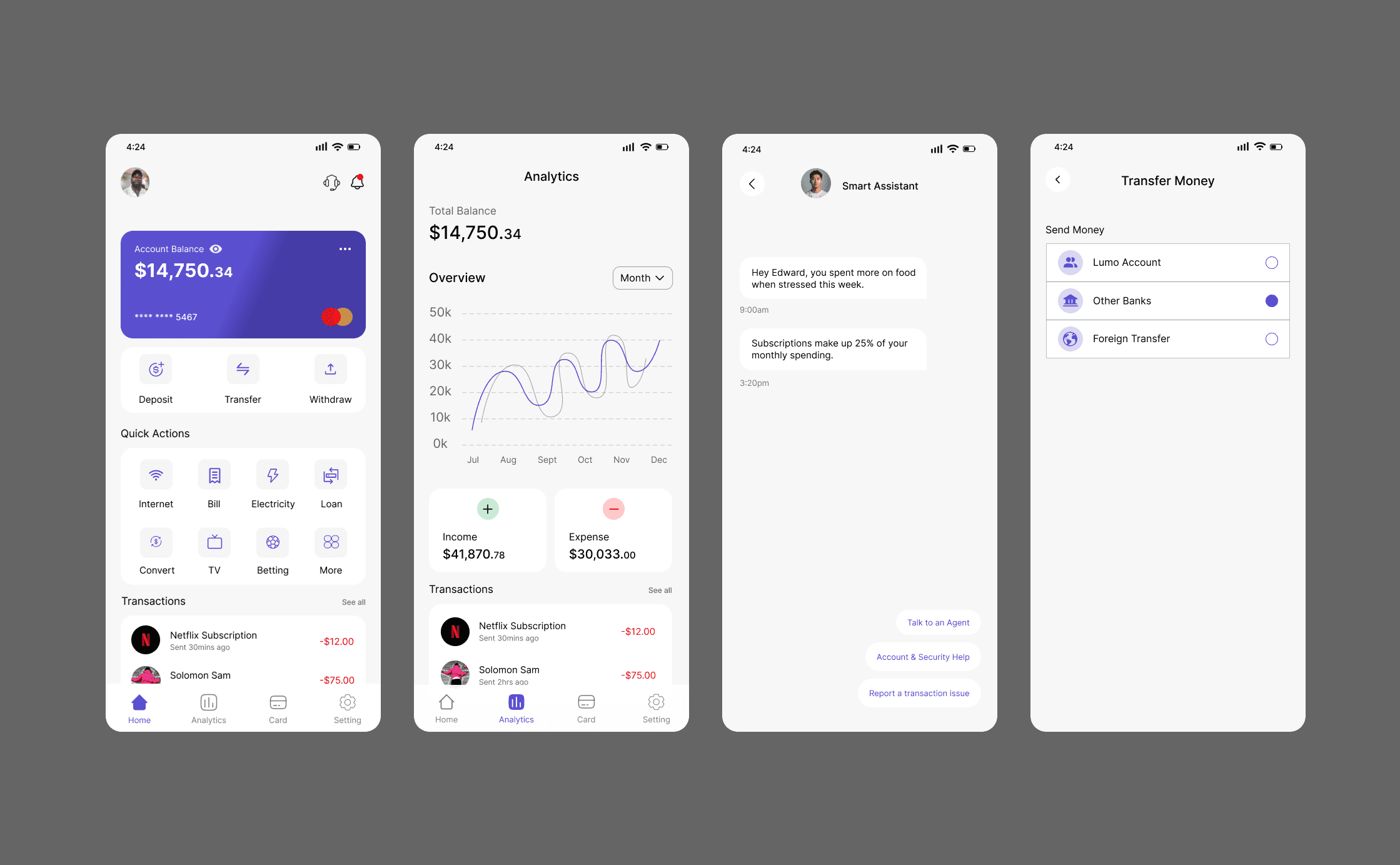
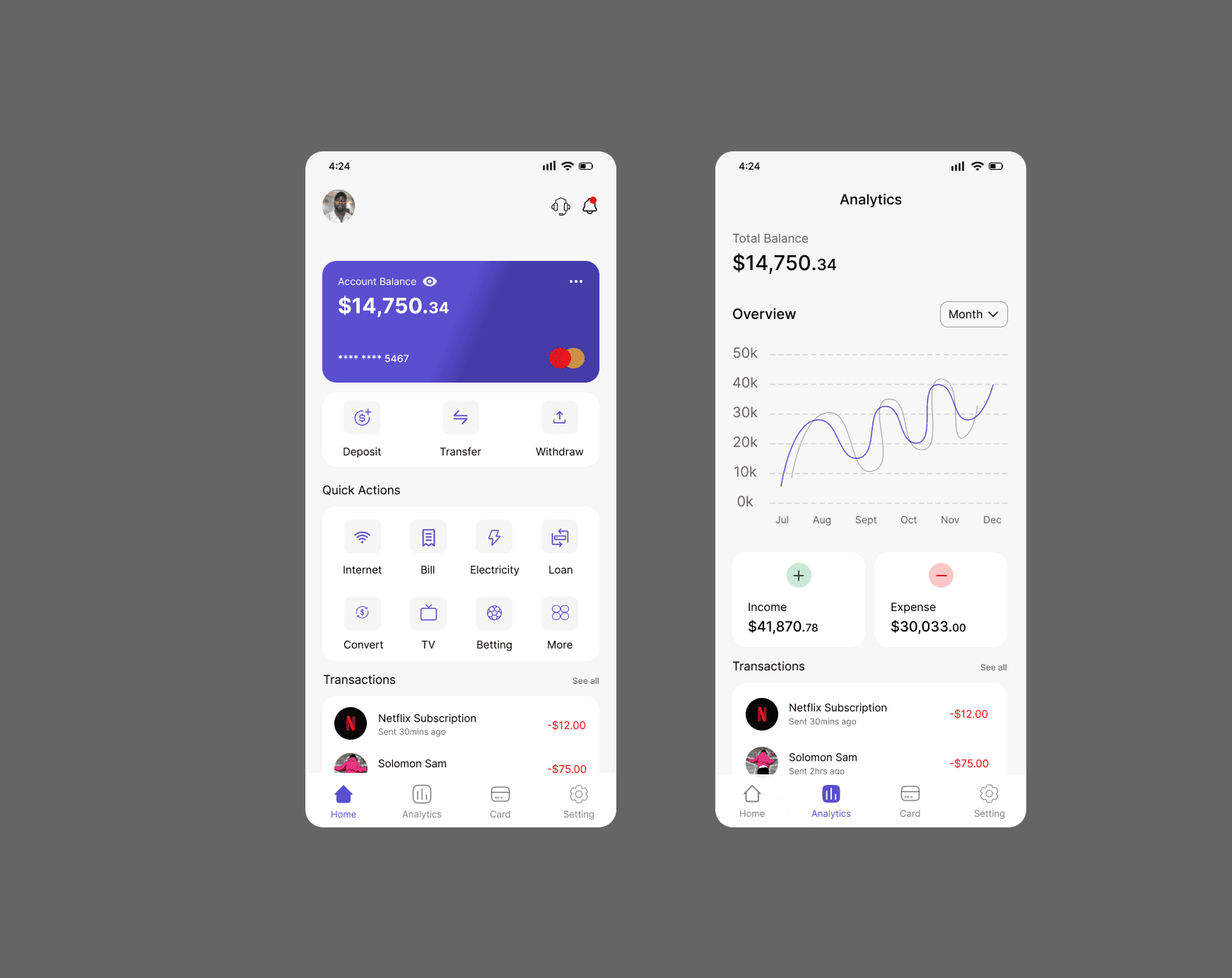
Smart Cash Flow Assistant
Smart Cash Flow Assistant
Smart Cash Flow Assistant
A context aware AI assistant that analyzes spending patterns and emotional signals to support
confident financial decision making.
A context aware AI assistant that analyzes spending patterns and
emotional signals to support confident financial decision making.
A context aware AI assistant that analyzes
spending patterns and emotional signals
to support confident financial decision
making.
Simplified Financial Summary
Simplified Financial Summary
Simplified Financial Summary
Income, expenses, and upcoming obligations are summarized clearly, avoiding complex graphs
that contribute to cognitive overload.
Income, expenses, and upcoming obligations are summarized clearly,
avoiding complex graphs that contribute to cognitive overload.
Income, expenses, and upcoming obligations
are summarized clearly, avoiding complex
graphs that contribute to cognitive overload.
Anxiety Reducing Interface
Anxiety Reducing Interface
Anxiety Reducing Interface
A bright, minimal visual design helps lower cognitive load and makes financial review feel less
intimidating.
A bright, minimal visual design helps lower cognitive load and makes
financial review feel less intimidating.
A bright, minimal visual design helps lower
cognitive load and makes financial review
feel less intimidating.
Anxiety Reducing Interface
Anxiety Reducing Interface
Anxiety Reducing Interface
Users are alerted early when expenses are likely to affect cash flow, with suggestions for small
adjustments before issues arise.
Users are alerted early when expenses are likely to affect cash flow, with
suggestions for small adjustments before issues arise.
Users are alerted early when expenses are
likely to affect cash flow, with suggestions
for small adjustments before issues arise.
WIREFRAME
WIREFRAME
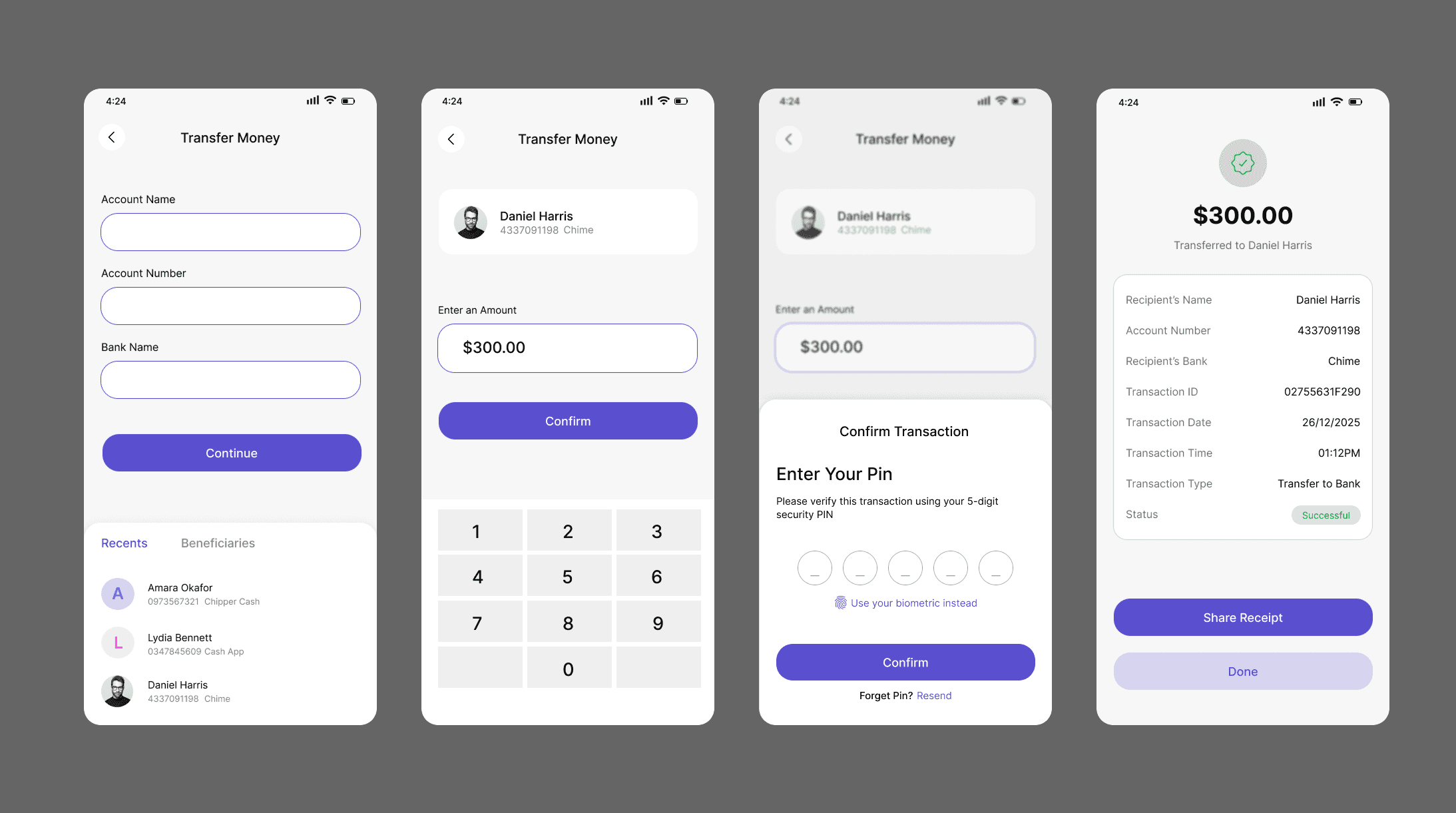
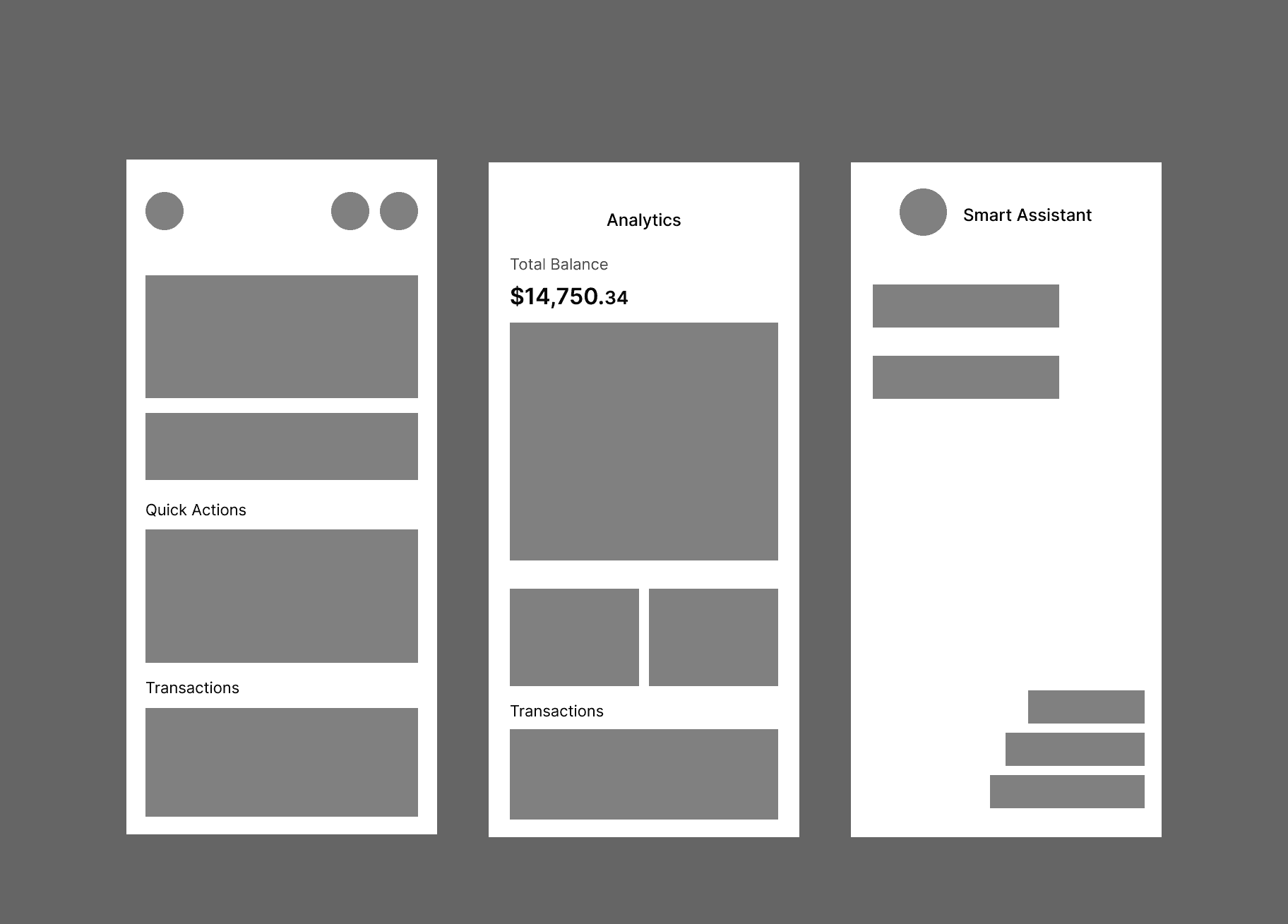
I explored multiple wireframes layouts to evaluate different information hierarchies and checkout
flows. Each iteration focused on reducing cognitive load while balancing speed and
reassurance. Through iteration. I identified a layout that provided clarity around payment
details while intentionally slowing down high risk actions.
I explored multiple wireframes layouts to evaluate different information
hierarchies and checkout flows. Each iteration focused on reducing
cognitive load while balancing speed and reassurance. Through iteration.
I identified a layout that provided clarity around payment details while
intentionally slowing down high risk actions.
I explored multiple wireframes layouts to
evaluate different information hierarchies and
checkout flows. Each iteration focused on
reducing cognitive load while balancing speed
and reassurance. Through iteration.
I identified a layout that provided clarity
around payment details while intentionally
slowing down high risk actions.
USER RESEARCH
USER RESEARCH
Poor Customer Services
Poor Customer Services
Poor Customer Services
Users often struggle to reach human support, facing long hold times, scripted bots, phone trees,
or redirects to unhelpful FAQs. Many apps lack live chat or emergency lines, leaving users
frustrated during urgent issues like blocked transactions.
Users often struggle to reach human support, facing long hold times,
scripted bots, phone trees, or redirects to unhelpful FAQs. Many apps
lack live chat or emergency lines, leaving users frustrated during urgent
issues like blocked transactions.
Users often struggle to reach human support,
facing long hold times, scripted bots, phone
trees, or redirects to unhelpful FAQs. Many
apps lack live chat or emergency lines,
leaving users frustrated during urgent
issues like blocked transactions.
Complicated User Interface and Onboarding
Complicated User Interface and Onboarding
Complicated User Interface and Onboarding
Apps overwhelm with too many stops, and confusing KYC processes, repetitive verifications,
or clunky navigation. New users drop off during sign up, and everyday tasks (like checking
balances or transferring money) feel friction heavy.
Apps overwhelm with too many stops, and confusing KYC processes,
repetitive verifications, or clunky navigation. New users drop off during
sign up, and everyday tasks (like checking balances or transferring
money) feel friction heavy.
Apps overwhelm with too many stops, and
confusing KYC processes, repetitive
verifications, or clunky navigation. New users
drop off during sign up, and everyday tasks
(like checking balances or transferring
money) feel friction heavy.
Lack of Transparency and Trust
Lack of Transparency and Trust
Lack of Transparency and Trust
Partnering with backend banks create confusion over who's responsible for issues. Users worry
about funds not being fully protected or app misusing data, eroding trust compared to
traditional banks.
Partnering with backend banks create confusion over who's responsible
for issues. Users worry about funds not being fully protected or app
misusing data, eroding trust compared to traditional banks.
Partnering with backend banks create
confusion over who's responsible for issues.
Users worry about funds not being fully
protected or app misusing data, eroding
trust compared to traditional banks.
Delays in Transactions or Withdrawals
Delays in Transactions or Withdrawals
Delays in Transactions or Withdrawals
Transfers, deposits or withdrawals face artificial delays ( e.g maintenance or review holds) even
for verified users. This prove especially problematic for time sensitive payments like rent.
Transfers, deposits or withdrawals face artificial delays ( e.g maintenance
or review holds) even for verified users. This prove especially problematic
for time sensitive payments like rent.
Transfers, deposits or withdrawals face
artificial delays ( e.g maintenance or review
holds) even for verified users. This prove
especially problematic for time sensitive
payments like rent.
Hidden or Unclear Fees
Hidden or Unclear Fees
Hidden or Unclear Fees
Complaints focus on unexpected charges for transfers, subscriptions, in instant deposits, or
inactivity. Users feel misled by "free" services that later introduce costs, especially in buy now
pay later or premium features.
Complaints focus on unexpected charges for transfers, subscriptions, in
instant deposits, or inactivity. Users feel misled by "free" services that
later introduce costs, especially in buy now pay later or premium features.
Complaints focus on unexpected charges for
transfers, subscriptions, in instant deposits, or
inactivity. Users feel misled by "free" services
that later introduce costs, especially in buy
now pay later or premium features.
EXPECTED IMPACT
EXPECTED IMPACT
The design reduces checkout anxiety and builds user confidence by introducing intentional
friction at critical moments in the payment flow, helps users make more considered financial
decisions.
The design reduces checkout anxiety and builds user confidence by
introducing intentional friction at critical moments in the payment flow,
helps users make more considered financial decisions.
The design reduces checkout anxiety and
builds user confidence by introducing
intentional friction at critical moments in
the payment flow, helps users make more
considered financial decisions.
REFLECTION
REFLECTION
With more time, I would validate the friction points through usability testing and measure
completion rates versus user confidence.
With more time, I would validate the friction points through usability testing
and measure completion rates versus user confidence.
With more time, I would validate the friction
points through usability testing and measure
completion rates versus user confidence.